The Bees' Knees
  • The Bees' Knees
  • Press
  • Pictures
  • Contact
  • Beekeeping Blog

Wintering bees indoors

2/7/2013

0 Comments

 
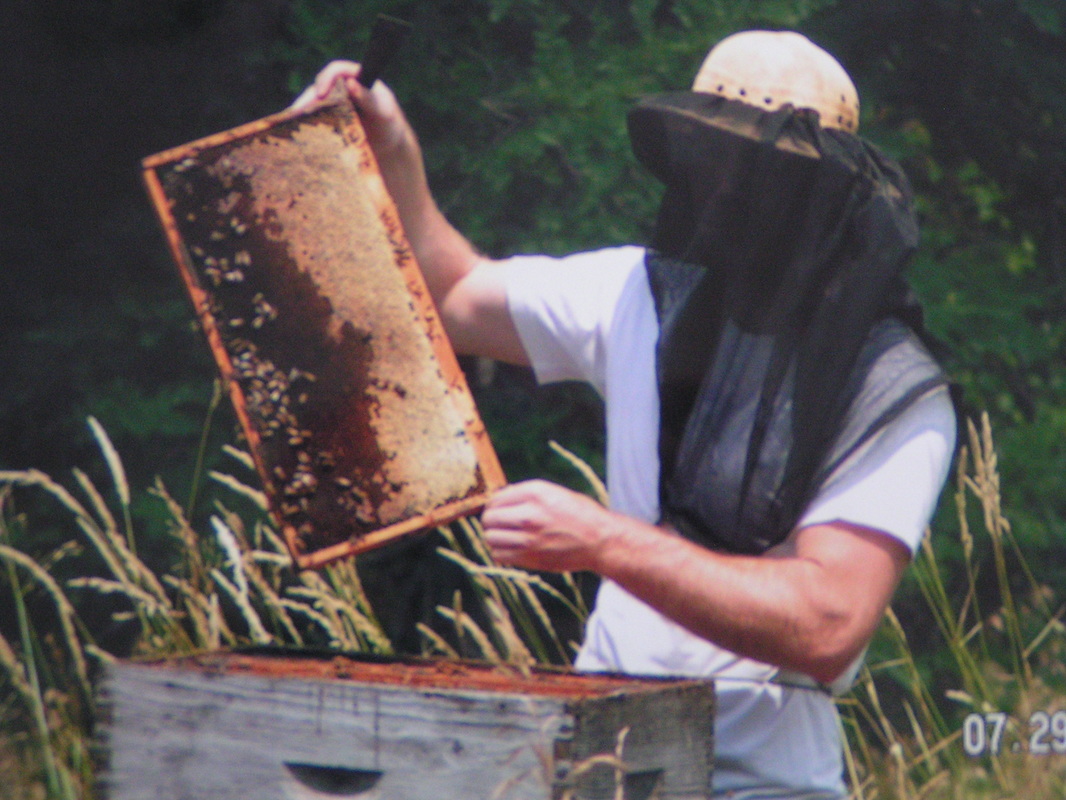
"Fruits and vegetables are always there when you go to grocery store, but in coming years their availability could get stung.

The bees that pollinate your food are dying at an increasing rate causing a nationwide bee shortage. Without those bees prices will rise.

A National Agriculture Statistics Service report says honey producing hives in the United States shrunk from 4.5 million in 1980 to 2.4 million in 2008. That number is even lower four years later.

So one local beekeeper is trying a newer method, hoping he can stay in the business.

Dan Bauer's bees are no longer sitting out in the cold. He says, 'I don't know anybody else that does it in this area. A lot of it's being done in Idaho and Canada.'

What Bauer is referring to is wintering his bees inside. Once the weather gets cold, they are put into storage where they can hibernate.

'I think this is gonna be the way that a lot of beekeepers might have to go,' says Bauer adding, 'We've already had people interested in what we are doing here.'

This is all because Bauer, like other beekeepers nationwide, fears the bee death rate is only going to get worse.

Entomologists like Janet Knodel with the NDSU Extension Service are puzzled. Knodel says, 'What they're seeing now is the bees are just disappearing, and the worker bees don't come back to the hive.'

They have narrowed down some potential factors to the die out rate. They include parasites that attack the bees, increased stress from transporting them long distances and pesticide use.

Still, there is much research to be done."


Beekeepers Getting Stung by Increasing Bee Deaths
from: www.valleynewslive.com
0 Comments

Honey Bee

11/27/2012

0 Comments

 
The honey bee said to me, before she stung me,
"Nothing's free.  Buzz, buzz, buzz, I work because,
we have to eat, when life's not sweet."
She kissed my ear, she brushed my face,
I shed a tear, when we embraced.
A lesson taught, a lesson learned,
a life forgot, a truth discerned.
The sun recedes, the winter days,
the cold impedes, and slows our ways.

She drifted then, into the sun.
She knew no sin, her life was done.
The price we pay, our lives we work,
yet still one day, we'll see Death lurk.
Shadows and dust, In God We Trust,
because we must, Love got lust.
No tears were shed, when blood was bled.
The living said, "We envy the dead."


- Billy Craig
0 Comments

Fall beekeeping

10/27/2012

0 Comments

 
"So what can we do to help our bees make it through winter? There is no plan that ensure 100% survival. Bees are livestock. Things can just go bad. But a few things can help.

Typically, most consider winter preparations consists of the following:
1) Put on a mouse guard at the entrance.
2) Lift the hive and see if it has enough stored honey by how heavy it is.
3) Wrap the hive with some sort of insulation or roofing paper.
4) We build a wind break.
5) We treat for mites and nosema.

These might be good measures to take. However, they are not fail proof. In fact, here are three concerns that probably cause our hives to die during the winter that many overlook:

1) Queenlessness. Your hive is most certain to die if your queen is weak or gone going into winter.
2) Winter Condensation. If you seal up your hive too tight, you might increase the overall condensation within the hive and cause this cold water to constantly drip onto the cluster and eventually kill your hive.
3) Keeping stored honey next to the winter cluster. How many times do we hear that a hive died even though there was plenty of honey.

So, here’s my checklist for what you should be doing to your hives now to prepare for a great hive in the spring:

1) Remove queen excluders.
2) Remove honey supers.
3) Examine the amount of stored honey and be sure your bees have plenty. Most beekeepers in the north lift the back of the hive and hope it feels like there is 70 pounds of stored honey. 70 pounds is the approximate equivalent of 1 medium super full of honey.
4) If your hive is short on stored honey, FEED! Feed 2:1 sugar water. Use an internal or top feeder if robbing is a problem. Robbing is more of a problem during the fall dearth.
5) Make sure that your hive has some sort of upper ventilation. It does not have to be much but something. We now make our inner covers with ventilation slots. And we leave our screen bottom boards open all winter.
6) Use good mouse guards, either metal or wooden entrance cleats to keep mice out.
7) Treat the hives 3 weeks in a row with powdered sugar for mite control. This is best started in August.
8) If wrapping hives, be sure to allow upper ventilation.
9) Combine weak hives with strong ones. Most of the small swarms you caught are not going to winter well unless you caught them in May. Do not feel like a failure if you’ve worked hard to build up your numbers, but now you have to slice your hive count in half by combining hives. Combining ten hives into 5 which survive the winter is better than having 8 out of 10 die out.

Much can be said about preparing a hive for winter, but the hive that has the best chance of surviving the winter will be the hive that was very strong all year and has a young queen. Remember, a strong hive is more apt to be pest and disease free, thus overwintering much better because it does not have viruses caused by mites."


LESSON 40: The Beekeeping Year Starts In The Fall
David & Sheri Burns
Long Lane Honey Bee Farms
217-427-2678
www.honeybeesonline.com
0 Comments

Old bee enemy on the rise... Winter aproaches

10/5/2012

0 Comments

 
"Bees or something flying in and out of small holes in the mortar in the fireplace. Neighbors just want me to blast them with Raid Wasp Killer, but I would prefer a different approach.

I would love for this to somehow be a win/win situation for us and the bees. Can you help?"  - Mr. M


Hello Mr. M,

Bees behind brick or concrete can be very difficult and expensive to remove.  However, you are in luck.  Michigan winters are very hard on all species of bees.  Whether you have honey bees or some other kind of insect, it's very likely to die off over the winter.  Honey bees have a 50/50 chance of making it.  All the other flying/stinging insects will die soon after the cold weather arrives to stay.  The most reasonable thing to do, in my opinion, is to just wait for nature to run its course.  I think your problem will solve itself.

I hope that's an answer you like hearing, and good luck!

Billy Craig
0 Comments

Bees hovering over car

10/5/2012

0 Comments

 
"Have a large bee hive in a tree in my front lawn which needs removal. Just discovered it. The weight is causing it to fall closer to vehicles in driveway. Need help with removal."  - Mr. C


Hello Mr. C,
I'm responding about the beehive in the tree.  I was wondering where you live and how high off of the ground is the hive?  Also, is the hive made out of paper or are there bees crawling all over the outside of it?  My suspicion is that the nest is a hornet's nest, in which case, they'll all be dead very soon (perhaps this weekend, if it gets as cold as predicted). Then your problem is solved.  Once it drops below freezing for a few days, you can be sure that the hornets are dead, and then you can knock the nest off the limb without any worries.  If they're honey bees, which seems unlikely, then you may have to wait longer for them to die.  In that case, depending on your location, I may be able to come out and get them.

Hope that helps,
Billy Craig
0 Comments

Bees in trees like dogs with fleas

9/1/2012

0 Comments

 
"I am interested in having a swarm of bees removed from a tree trunk in my yard. The bees are housed in a hole in my tree (about 1 foot diameter) that is only about 4 foot up from the ground. Is this something you would be able to assist with, and if so, how much do you charge?  Thank you."  - Dan


Thank you, sir , for contacting me.  You're a little ways out of my territory, as far as driving distance goes.  The best I can do is give some advice. 

I don't know how bothersome these bees are to you.  There's a high probability that they will die over the winter, which isn't too far away now.  The easiest thing to do is nothing.

However, if you really want them gone now, you may be able to find a willing beekeeper in your area at beesource.com.  If you search under "Swarm Removal", they have a list of beekeepers in Michigan that remove bees and where they are located.

Finally, if the insects are not honey bees, but rather  some other sort of stinging, flying insect (wasp, hornet, yellowjacket), I would recommend killing them yourself.  This involves taking a can of Raid Wasp/Hornet Killer (or its equivalent), going out to the tree shortly after dusk on a cool evening, and spraying the can in the tree very liberally.  Leave quickly, and you may avoid getting stung.

I hope this helps in some way.

Billy Craig
0 Comments

Everything's bigger in Texas

8/13/2012

0 Comments

 
"Honey bees are flourishing in Texas after a long drought has eased in parts of the state, reviving beekeepers' fortunes—and inflicting pain on unlucky Texans who have stumbled on hives in unwanted places.

The resurgence means Texas could dispatch more and better bees across the nation to help pollinate crops such as almonds next year. Some 80% of Texas beekeepers load their charges onto trucks and ship them to California and other states.

Bee specialists say that if Texas bees remain strong, they might help offset colony losses in some other states currently undergoing dry spells, such as Montana and the Dakotas, which contribute to the national pollination circuit.

The Texas bee revival also comes as the nation's honey bees have been sharply declining in recent years from colony-collapse disorder, a phenomenon scientists are still trying to understand. Bee health improved somewhat this winter nationwide, researchers say, perhaps because of the unusually warm temperatures in many areas.

The downside of Texas's turnaround is that honeycombs are showing up almost everywhere—in roof eaves and walls, within water meters and boats, and in one case on the eighth-floor pool deck of a hotel in downtown Austin."

Not All Texans Enjoy a Bee Revival
By ANA CAMPOY
0 Comments

Global warming strikes again!

7/4/2012

1 Comment

 
A South Carolina news team blames mild winter for increase in bees and bee attacks.

http://news.yahoo.com/video/weather-15749664/weather-could-be-to-blame-for-spike-in-bees-29876697.html


If bees are a problem in your garden, yard, or house, look here for help.
1 Comment

What do bees do in the winter?

2/8/2012

0 Comments

 
Wondering what to write about today, I asked my wife what she wanted to know about bees.  This was it.
In the winter, bees hibernate.  Not like bears, however, but like penguins.  They huddle in a mass and conserve warmth in a tight ball.  Bees in the inside of the huddle move to the outside, and vice versa.  If it warms up a bit (>50 degrees), and is sunny, they go for a flight and relieve themselves, as healthy bees are unlikely to defecate inside the beehive.  They consume honey for energy.
It's amazing to me that honeybees and penguins would use the same technique to stay warm in the winter.

"Honeybees head to the hive when temperatures drop into the 50s. As the weather becomes cool, the honeybees gather in a central area of the hive and form a “winter cluster.” A winter cluster is much like a huddle you may have seen at a football game — except it lasts all winter!
Bees have one main job in the winter — to take care of the queen bee. This means they must keep her safe and warm.
In order to do so, worker bees surround the queen and form a cluster with their bodies. The worker bees then flutter their wings and shiver. This constant motion and continuous use of energy is how the bees keep the inside temperature of the hive warm.
In order to keep shivering, the bees must have enough honey. This is how they get their energy. One of the most important jobs of the beekeeper in the winter is to make sure the honey supply stays full so the bees can keep shivering.
Though the queen is always at the center of the cluster, worker bees rotate from the outside to the inside of the cluster, so no individual worker bee gets too cold. The temperature of the cluster ranges from 46 degrees at the exterior to 80 degrees at the interior. The colder the weather is outside, the more compact the cluster becomes.
In order to produce body heat and stay alive, honeybees must rely on honey for energy. Some studies have found that hives of honeybees will consume up to 30 pounds of stored honey over the course of a single winter. On warmer days, bees will leave the cluster briefly in order to eliminate body waste outside the hive."

http://wonderopolis.org/wonder/what-do-bees-do-in-winter/

0 Comments

Feeding bees more sugar

1/28/2012

0 Comments

 
Lots of pics here of a Michigan State professor feeding bees with sugar boards.  There are detailed instructions for sugar-board feeding, plus lots of pics of beehives in the bitter cold Michigan winter.
0 Comments

    Author

    Billy Craig
    Beekeeper/ Entomologist

    Picture

    Archives

    May 2013
    April 2013
    March 2013
    February 2013
    January 2013
    December 2012
    November 2012
    October 2012
    September 2012
    August 2012
    July 2012
    June 2012
    May 2012
    April 2012
    March 2012
    February 2012
    January 2012

    Categories

    All
    Advice Column
    Africa
    Aphrodisiacs
    Apitherapy
    Atheism
    Bats
    Bears
    Bee Breeding
    Bee Culture
    Beekeeping Stories
    Bee Removal
    Bees
    Bee Stings
    Bee Story
    Bee Venom
    Bible
    Brazil
    Brood
    Buddha
    California
    Canada
    Charles Martin Simon
    China
    Chinese Honey
    Chuck Norris
    Colony Collapse Disorder
    Creation
    Dance
    Dandelions
    Deer
    Demaree Method
    Diet
    Dogs
    Drones
    Drug Companies
    Drugs
    Easter
    E.B. White
    Education
    Einstein
    Emily Dickinson
    Europe
    Evolution
    Experiments
    Famous Beekeepers
    Feeding
    Fibonacci Sequence
    Flies
    Florida
    Foulbrood
    Georgia
    Global Warming
    Golden Raintree
    Government
    Hawaii
    Hibernation
    Hive Manipulation
    Honey
    Honey Plants
    Illinois
    Insects
    Israel
    Killer Bees
    Louisiana
    Mead
    Micheal Mac Giolla Coda
    Michigan
    Minnesota
    Money
    Monkeys
    Nevada
    New York
    North Carolina
    Ohio
    Patriotism
    Penguins
    Pesticides
    Pests And Diseases
    Philippines
    Pictures
    Poems
    Pollen
    Pollination
    Propolis
    Queen Bees
    Royal Jelly
    Small Hive Beetles
    Smoke
    South Carolina
    Sugar
    Supersedure
    Swarms
    Taxes
    Tennessee
    Texas
    Tuberculosis
    Urban Beekeeping
    Utah
    Varroa Mites
    Walt Wright
    Washington D.c.
    Wax
    Winnie The Pooh
    Winter
    Yellow Jackets

    RSS Feed

Powered by Create your own unique website with customizable templates.
